The Radiatively Driven Hypersonic Wind Tunnel
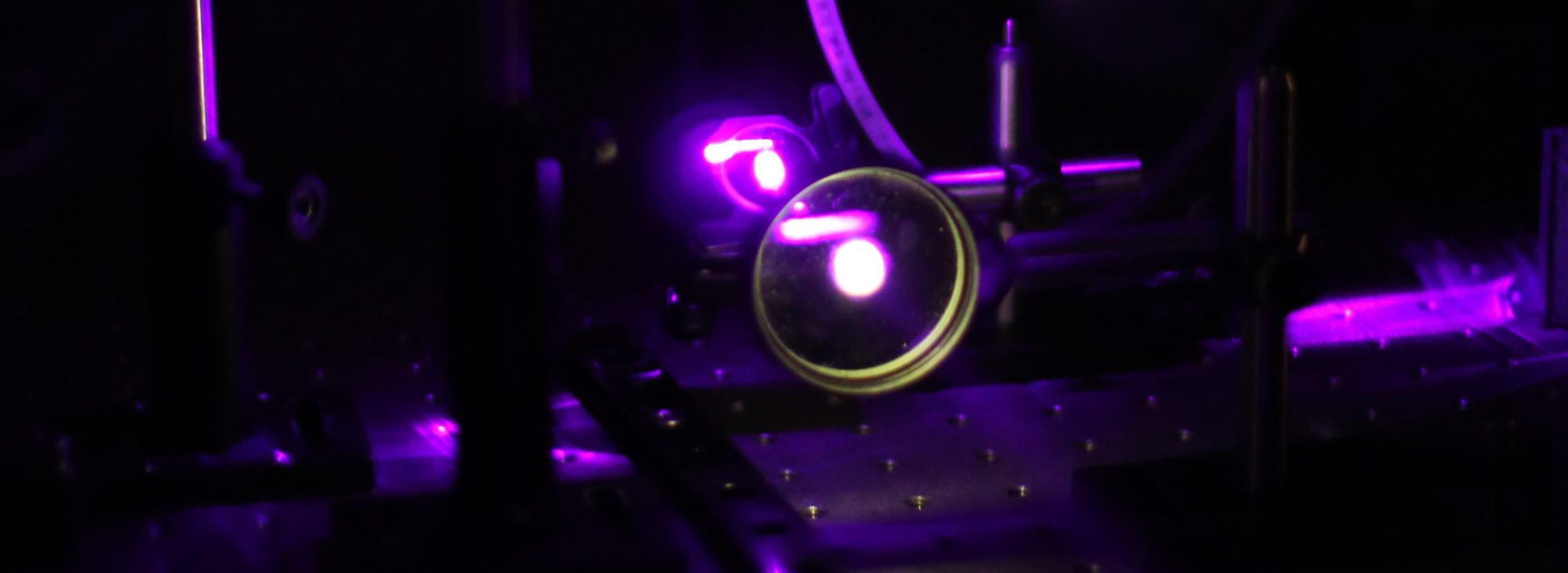
The RDHWT is being developed to provide high enthalpy, high Mach number (M = 15) true air flows for durations of seconds. The RDHWT overcomes the limitations imposed by the requirement of high plenum temperatures in current hypersonic test facilities because directed energy from a laser or electron beam is added in the supersonic region of a nozzle flow. Heating in this way maintains temperatures below a value where significant erosion of containment materials and thermal production of non-air species occurs. A missile scale facility operating on this principle would expect to have a run time from seconds to minutes, and be capable of operating up to Mach 13, with a test section of 0.5 m. Further performance can be accomplished using magneto-hydrodynamic acceleration after the radiatively driven wind tunnel section.We have recently demonstrated that high power laser beams and electron beams are suitable energy sources for the RDHWT at a power level of 10 kW and 100 kW. A full scale missile scale facility will require powers up to 60 MW, and plenum pressures up to 20 000 atmospheres. This ongoing program, called Mariah II is developing both models and techniques that will be required to create a missile scale facility. This research program is administered by the US Airforce at Arnold Engineering Development Center, and is carried in collaboration with Sandia and Lawrence Livermore National Labs and MSE technical application Inc.
Laser Driven Hypersonic Wind Tunnel
(Sponsored by the U.S. Air Force)
This joint project examines the feasibility of using very high power laser and optical sources to drive hypersonic wind tunnel facilities. The object is to minimize the temperature of the air in the plenum chamber of a hypersonic wind tunnel so that thermal effects, including dissociation and nonequilibrium energy distributions, do not occur.
Quantitative Imaging of Time-Evolving Structure in Supersonic and Hypersonic Flows
(Sponsored by the U.S. Air Force Office of Scientific Research)
This project seeks todevelop a rapid pulsed, laser-based approach to imaging high-speed flowfields. It makes use of the fact that light is scattered from the air molecules so that a high-power laser focused to a sheet can be used to generate a cross-sectional image of a flow field. Background scattering from windows and walls is eliminated by passing the light through a newly developed molecular filter which is placed in front of the camera. This project involves the development of the optical filter technology and the extension of the imaging approach to the capture of time-evolving flow strucure and volumetric images.